Four 360 CARLA events bring photonics closer to cultural heritage, environment and quantum in Milan
August 12th, 2026
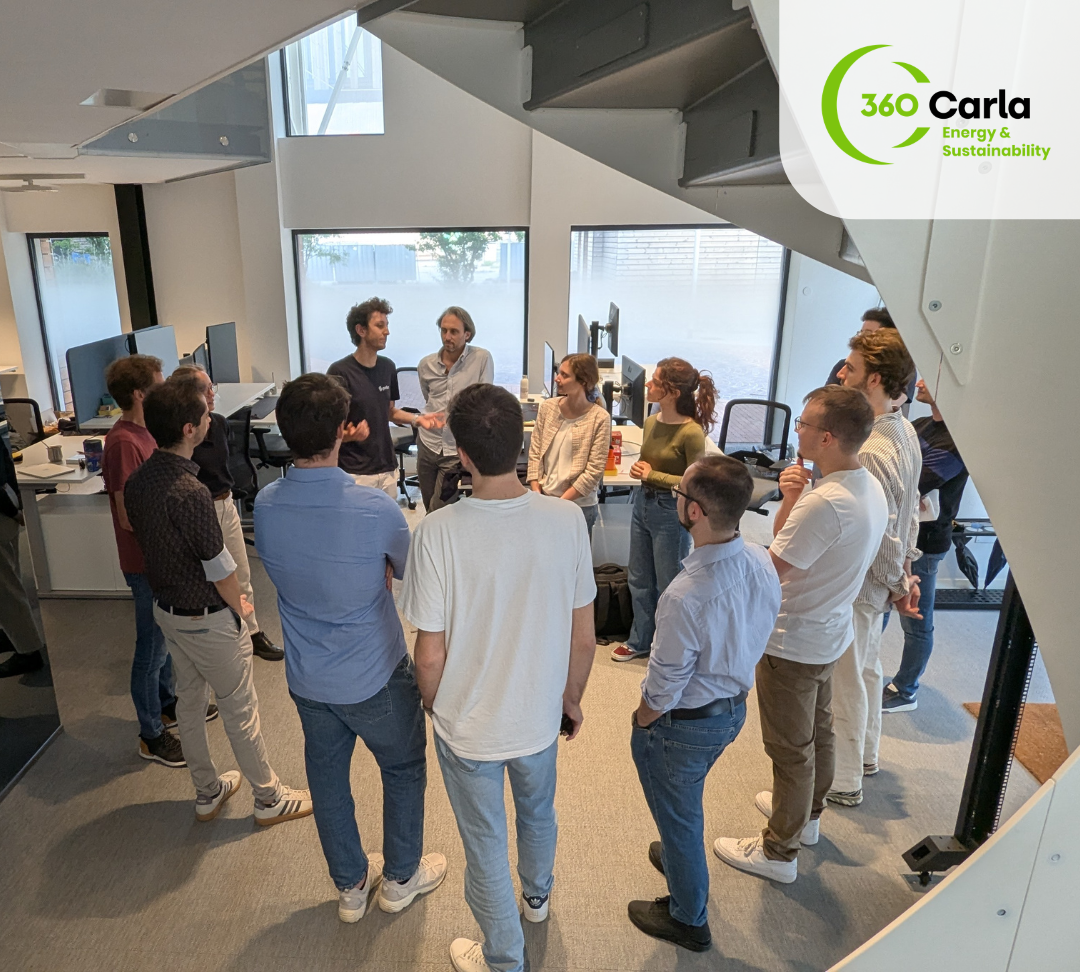
Between March and May 2026, Politecnico di Milano organised four 360 CARLA activities that showcased the many faces of photonics beyond the physics laboratory: a multi-institutional training on the scientific investigation of art, a hands-on workshop on lighting design software for Master’s students in Design, a company visit to a leading laser-technology manufacturer, and a visit to a deep-tech startup developing photonic chips for quantum technologies. Together, the four events reached a diverse audience of undergraduate, Master’s and PhD students, as well as early-career researchers, reinforcing the connections between academia, industry and society that lie at the heart of the 360 CARLA project.
Experience at Ephos Fab: Inside a photonics startup for quantum technologies
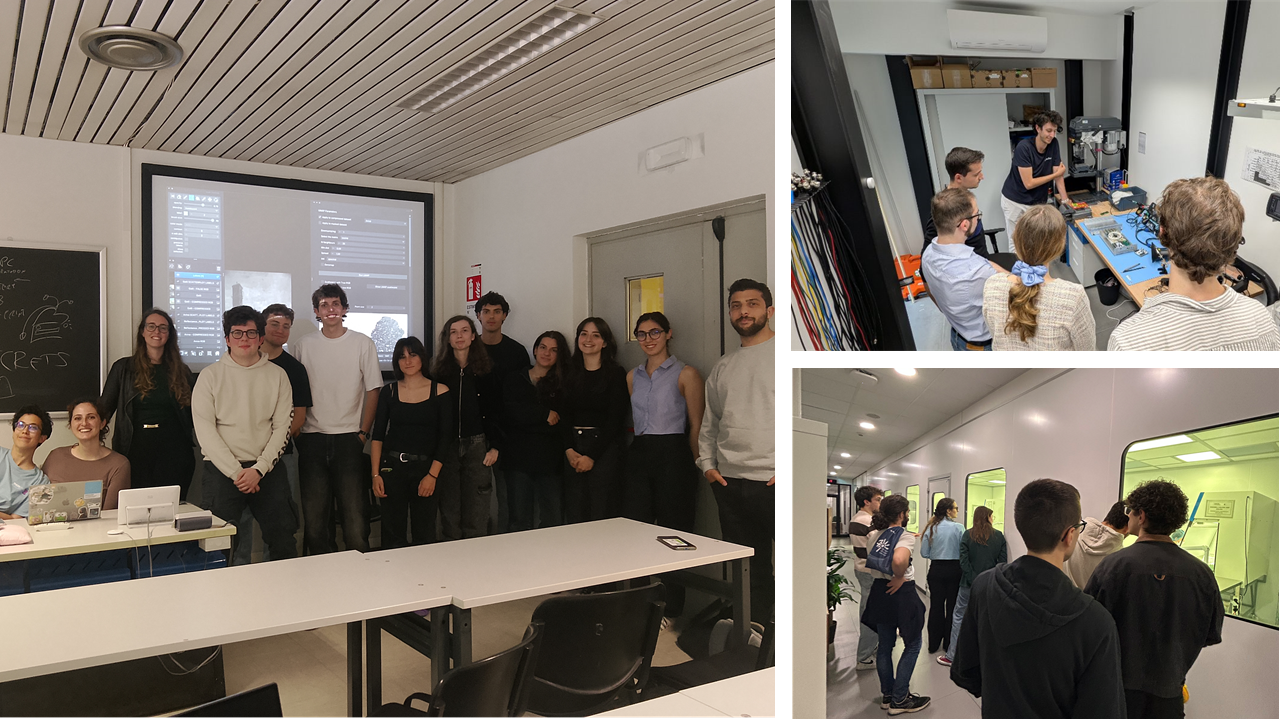
On 25 March 2026, Politecnico di Milano organised the 360 CARLA Experience “Ephos Fab Visit” at Ephos’s Fab-1 production facility in the Milan Innovation District. Ephos is a deep-tech startup designing and manufacturing glass-based optical chips for applications including AI data centres and quantum technologies, using proprietary femtosecond-laser writing to fabricate three-dimensional photonic circuits. The programme combined a company presentation and career overview, a guided tour of the production facility, and an extended networking session with an aperitivo.
Twenty participants took part, mostly undergraduate and Master’s students, with half attending a CARLA activity for the first time. Feedback was positive, with a maximum usefulness score of 5.00/5 for the company’s contribution and 82% of respondents reporting increased interest in innovation and entrepreneurship. One participant noted having “discover[ed] new career paths I hadn’t considered before this experience”, while another described how seeing the working environment of “one of the most cutting edge startups in the field of photonics” boosted their motivation to pursue a career in the field. The visit even led to a concrete opportunity, with one attendee arranging a Master’s thesis with an Ephos co-founder.
Photonics for Cultural Heritage: A journey across three laboratories
On 17 April, 8 May and 15 May 2026, Politecnico di Milano, Università degli Studi di Milano-Bicocca and Università degli Studi di Milano jointly organised the training “Photonics for Cultural Heritage”, hosted respectively by the ArtIS Lab, the Lambda Lab and the DIART Lab. The three half-day modules followed the same painting as it travelled between laboratories, allowing participants to compare diffuse-reflectance and UV-induced fluorescence hyperspectral imaging, XRF mapping, VIS–NIR–SWIR hyperspectral imaging, point-based reflectance spectroscopy and X-ray imaging on a single case study.
Yhe training combined theory, experimental sessions and data analysis in each laboratory. Twelve participants took part, with women representing 50% of the group and more than 40% coming from disciplines outside physics. Feedback was excellent, with an overall rating of 4.63/5 and a maximum usefulness score of 5.00/5; 88% of participants reported increased interest in a photonics career, and all respondents said they had benefited from the training. One participant highlighted the value of “being able to see the different research projects and research laboratories in the field of heritage science and photonics applied to cultural heritage” in Milan, underlining how the inter-institutional format made the local Heritage Science ecosystem more visible to newcomers.
Digital tools for lighting verification: Photonics meets design
On 20 April 2026, Politecnico di Milano hosted the training “Digital tools for lighting verification: a survey of DIALux software”, led by Prof. Andrea Siniscalco for Master’s students in Design. The session introduced participants to DIALux as a professional tool for verifying illuminance, uniformity, glare, energy performance and compliance with lighting standards, connecting creative design choices with measurable technical requirements. The day closed with an aperitivo dedicated to informal networking.
Six students attended, evenly split between women and men, all coming from fields other than physics and most attending a CARLA activity for the first time. Despite the small group, feedback was outstanding: respondents gave the maximum score across all indicators, and all reported increased interest in photonics, greater industry readiness and stronger networking. As one participant noted, the activity “was a really beneficial experience” that provided “valuable knowledge and practical training”.
Laser with a purpose: A day at Quanta System
On 21 April 2026, Politecnico di Milano organised the 360 CARLA Experience “Lasers with Purpose: Innovating for Health and Beauty” at the headquarters of Quanta System in Samarate. Since 1985, Quanta System has developed laser systems for surgery, aesthetics and art conservation, with more than 30,000 systems installed in 150 countries. The programme combined a corporate overview, a guided visit to the company’s laboratories and production environments, and a networking session with six Quanta System professionals representing different career stages.
Seventeen students and early-career researchers took part, most of them Master’s students in physics-related fields. Feedback was excellent, with an overall rating of 4.82/5 and a maximum score of 5.00/5 for the usefulness of the company’s contribution; 91% of respondents reported increased interest in a photonics career, and all participants said they had benefited from the Experience. As one participant reflected, the visit “helped me understand how research works in an industrial setting and how it is different from an academic one”, while another valued “connecting with people who have a similar academic path to mine” to better understand possible roles for a photonics engineer in industry.
Together, these four activities illustrate the breadth of the 360 CARLA project. From the multi-analytical study of cultural heritage, to the practical needs of design students, to laser technologies for health and beauty, to photonic chips for quantum computing, each event opened photonics to audiences that do not always cross paths with the field, while giving physics students a clearer view of research and industry opportunities close to home.
A sincere thank you to all speakers, trainers, company representatives and participants who made these events possible. Politecnico di Milano and the 360 CARLA project look forward to building on this momentum with further training and experience activities designed to connect students with the many career paths that photonics has to offer.